
Georg, who, along with a second driver, delivered aid supplies to the Romanian-Ukrainian border in November 2025 and January 2026, recounts:
“In November 2025, an old friend asked me if I would be willing to drive a transport of aid supplies for Ukraine from Vienna to Rădăuți on the Romanian-Ukrainian border. Since I have some ties to Romania, but hadn’t seen the country for over 20 years, I immediately agreed. Besides, I’m retired, and it’s nice to be able to do something useful. Otherwise, I let the matter rest and didn’t give it another thought until one day I received a phone call from the charity HELP AND HOPE asking if I could step in as a second driver for a transport in two days. Mindful of my promise and ignoring the reproaches of my partner, who said it was at least reckless to transport goods I didn’t know across two national borders for people I had never met, I immediately agreed.
Curious, I stood ready on the appointed day to drive the materials to the Romanian-Ukrainian border with Juha, a nice Finn. Since there’s no highway for long stretches along this route, meaning you can often only average 60 km/h, it’s a considerable distance. Juha’s taciturn nature and my tendency to be talkative complemented each other well, and I decided to offer my services to the charity HELP AND HOPE for further trips, if needed.
I’ve since driven a second transport and gathered some impressions of Romania. It has changed a lot since the 1990s. When I first crossed the Hungarian-Romanian border back then, I had the impression of entering a rather battered country. Broken roads, beggars, crumbling industrial buildings, damaged district heating pipes in the cities, steaming from them, and dilapidated apartment blocks were my first impressions. A strong sense of dissatisfaction and aggression among the people was palpable everywhere. Things have improved since then, although of course there is still much to be done, and the Romanians have learned that even in the new system, not everything that glitters is gold.
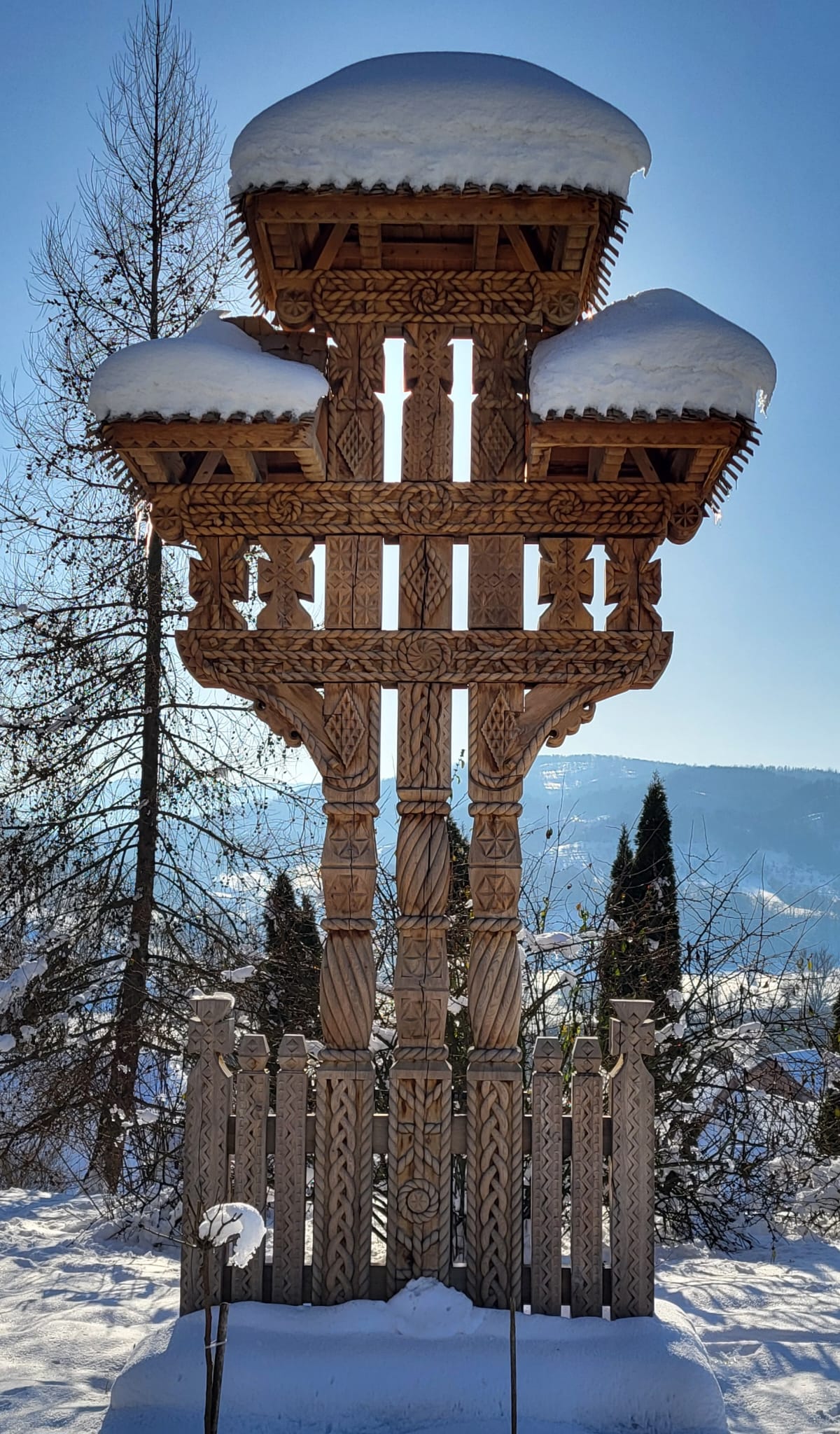
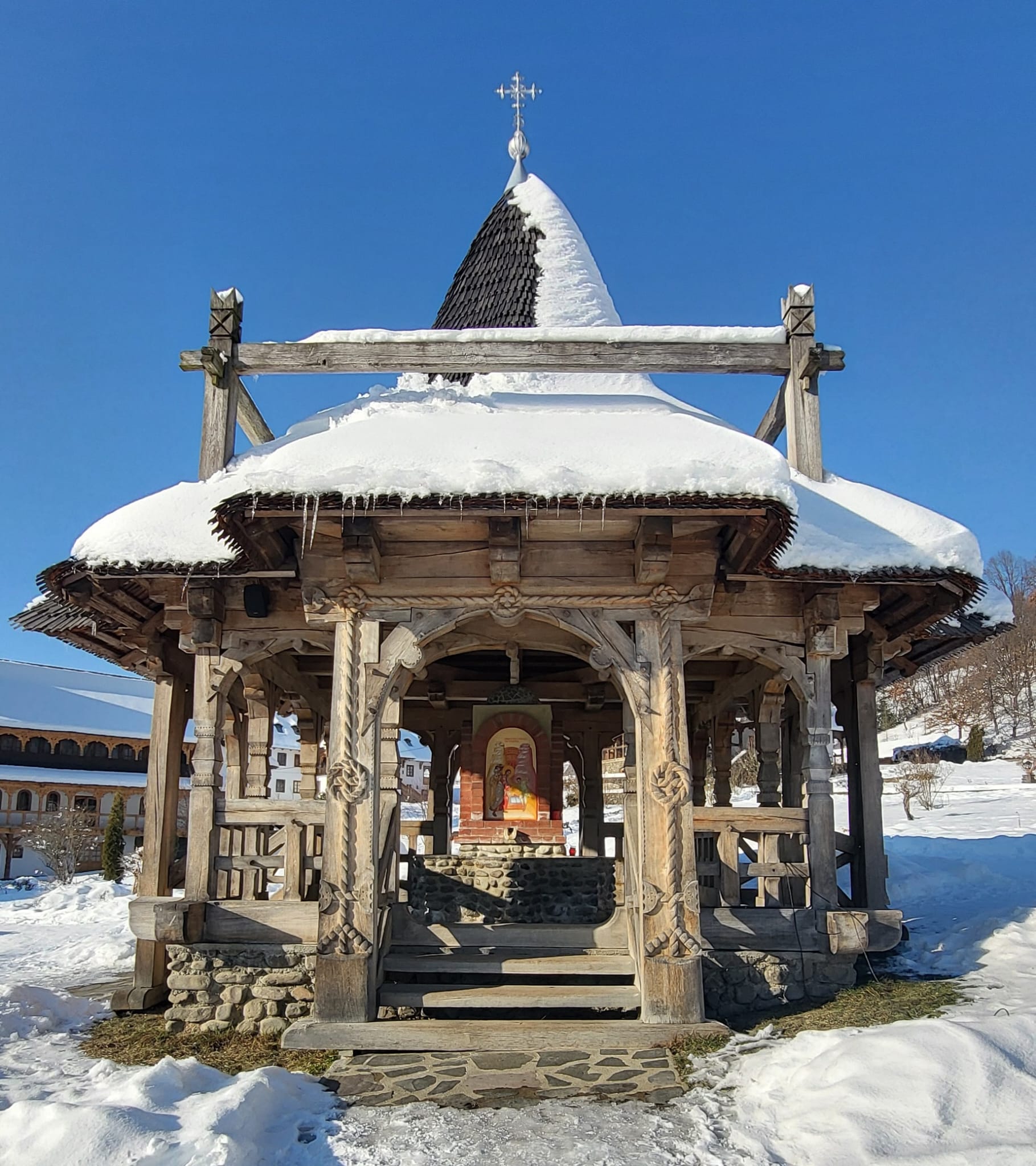
Now, on my second tour, I drove through a beautiful snowy landscape, past beautifully carved wooden gates. The sight of these wooden works of art was so impressive that my co-driver shouted, “Please stop!” and jumped out of the car to take photos. The wooden gates of Maramureș are world-famous.
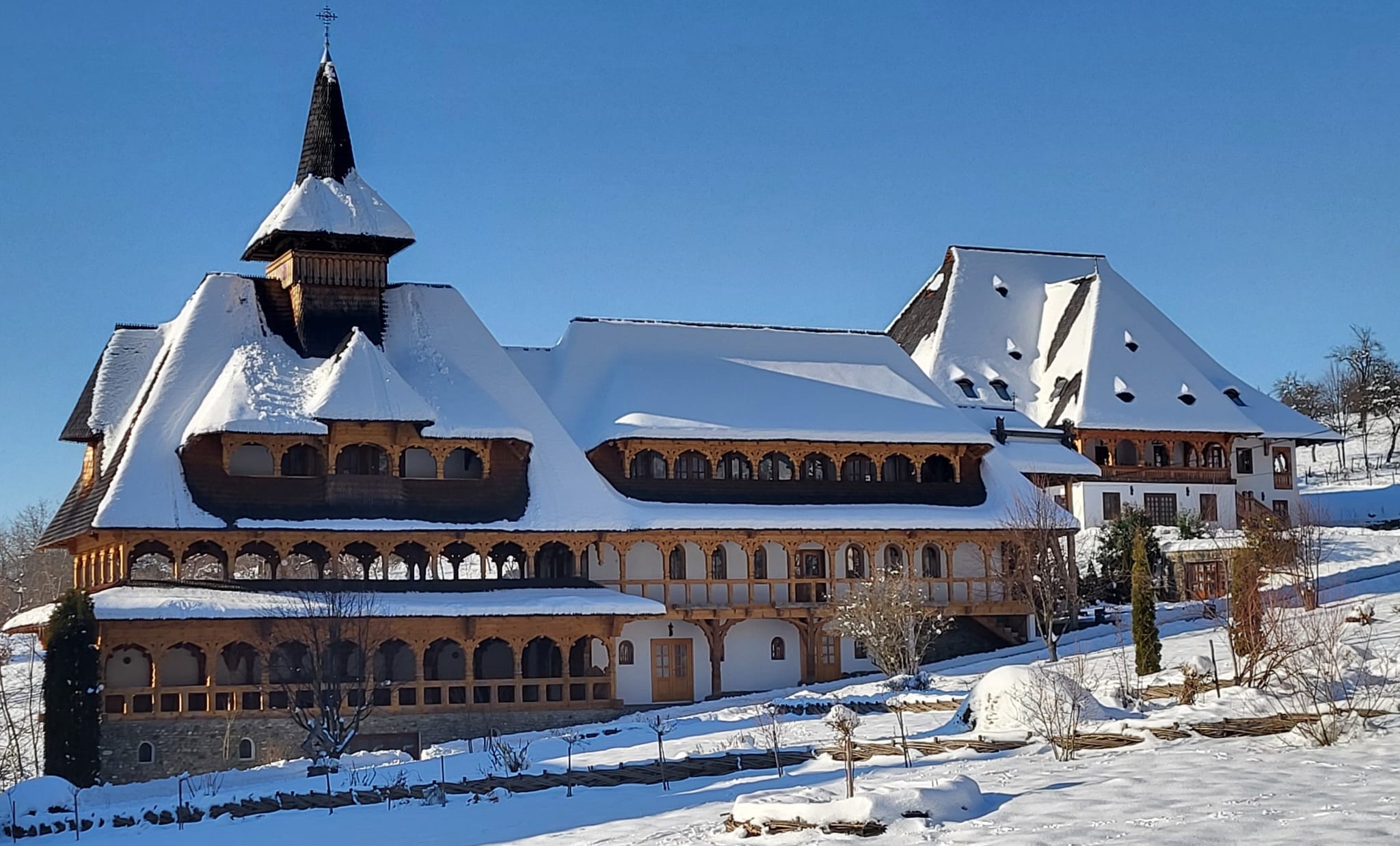
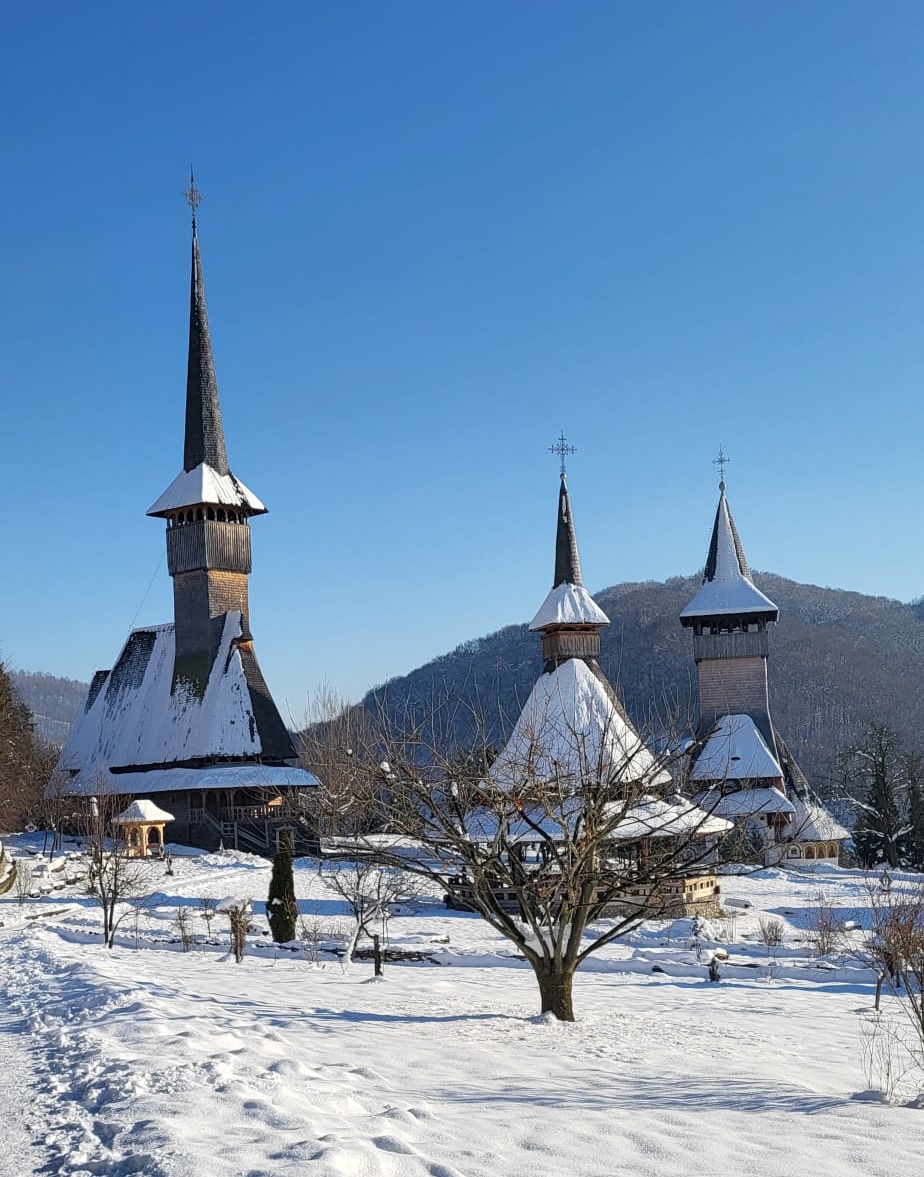
Our route also took us past the Bârsana Monastery. Part of the monastery was rebuilt after 2000, which can be seen as a sign of the great importance of the Orthodox Church in Romania.
Afterward, we continued past a beautiful ski resort to Rădăuți, where the donated goods were handed over.
However, the stories I heard from Stephan and Tanja, who received the goods in Rădăuți, were depressing. They spoke of air raid sirens, war graves, power outages, and infrastructure destroyed by rockets. We mustn’t forget that malfunctioning heating systems in winter can be life-threatening for the elderly, the sick, and children. In Romania, I experienced firsthand in 1995 the consequences of an only partially functioning district heating network. I heard about things I had only known from vague stories my parents had told me when I was young, things I had hoped would never happen again in Europe.
After a sadly brief conversation, it was time to head home. Even then, I saw signs that people in Romania are now better off than they were 30 years ago. I got caught in a small traffic jam caused by parents driving their children to school. In 1995, you probably wouldn’t have seen anything like that anywhere in the country except perhaps in front of an expensive private school in Bucharest.
Overall, the two transports I was able to carry out for the organization HELP AND HOPE were a help to Ukraine and a fond reminder of times gone by. At least for me, these trips confirmed that the problematic image that Romania largely has in my home country of Austria does not actually correspond to reality.“