

In mid-June, Anne and her friend Elfi brought 11 bicycles for children and teenagers, as well as clothing and toys, to the Jewish community in Alba Iulia. A week later, Janina Ilie from the organization “Alef” collected the items to distribute them to needy families and children in the Bucharest area.
Anne and Elfi report:
Along the way, we were able to visit a longtime friend in Lugoj and a befriended family in Cluj-Napoca and bring them some joy. These encounters brought great pleasure to both us and our friends. We felt like welcome guests.

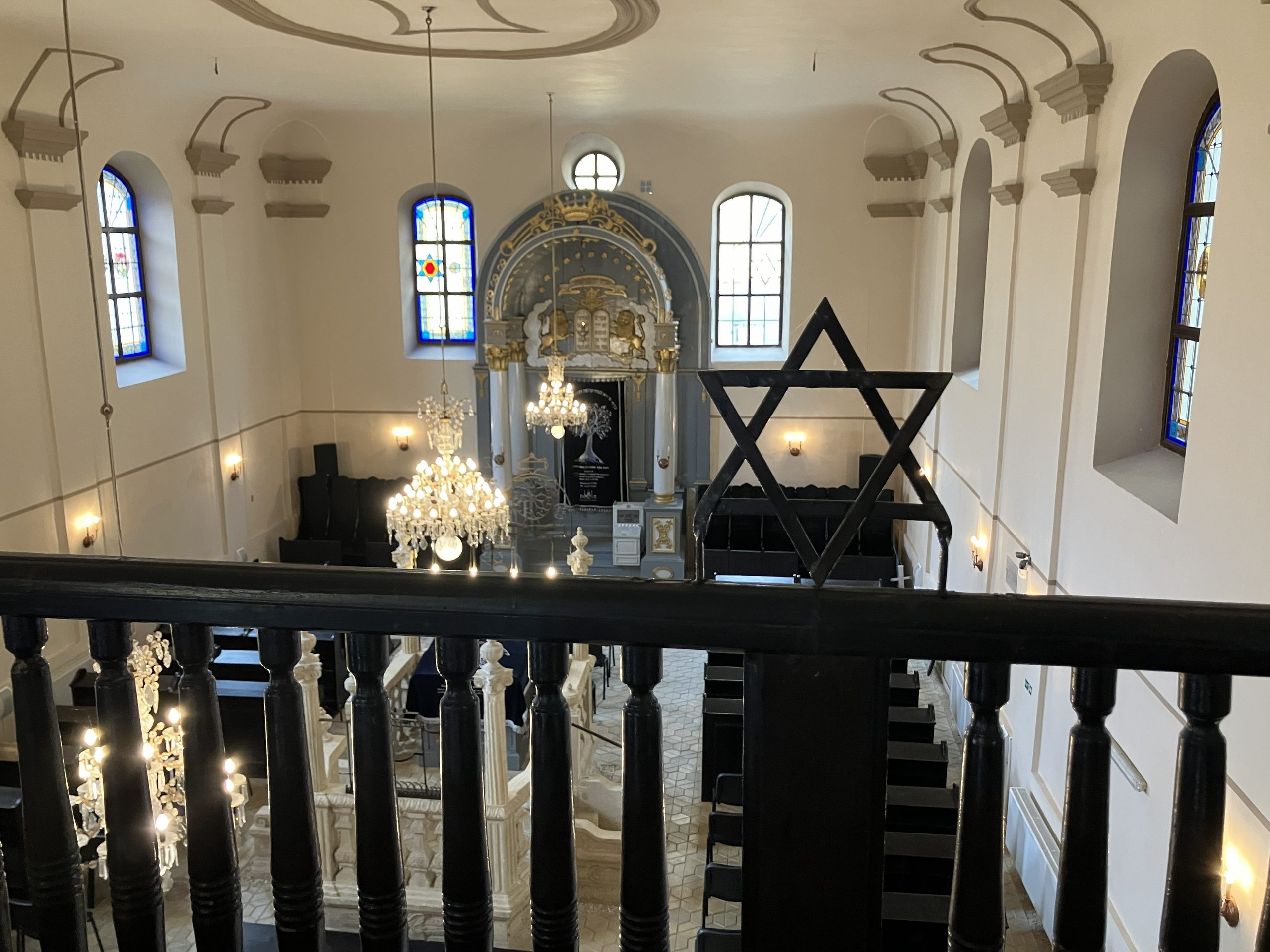
History of the Jews in Alba Iulia
The presence of Jews in Alba Iulia has been documented since the end of the 16th century. In 1653, the regional legal code stipulated that all Jews in Transylvania were permitted to reside exclusively in this city. According to the Swedish traveler Conrad Iacob Hiltenbrandt (1656), Jews had already established a synagogue there by the mid-17th century. In the first half of the 18th century, the Habsburg administration of Austria-Hungary expanded the privileges previously granted by the Princes of Transylvania, allowing Jews to engage in free trade and lead an independent community life.
According to the records kept between 1736 and 1835 (written in Hebrew, Yiddish, Ladino, Spanish, Hungarian, and Romani), the Jewish community of Alba Iulia was governed by a chairman, a committee of five to seven members, and a Bet Din (rabbinical court) of three to five members.
Toward the end of the 18th century, Jews had settled in other parts of Transylvania despite the existing legal restrictions. In 1779, Empress Maria Theresia again ordered that all Jews living in Transylvania should be concentrated in Alba Iulia. However, the implementation of this plan was interrupted by her son, Emperor Joseph II. He also granted permission for the construction of a Sephardic synagogue—a project that had already been proposed in 1774. Construction took over a century, as the synagogue was not opened until 1886. It remained in use until around 1980, when it was demolished by the communist government.
The newspaper “Siebenbuerger Israel” (Transylvanian Israel) was first published in Alba Iulia in 1883. The increasing antisemitism between the two World Wars culminated in Alba Iulia in 1938 when members of the Iron Guard destroyed the Ashkenazi synagogue. Between 1940 and 1944, the community suffered greatly under the anti-Jewish laws and policies of the Antonescu regime. The partial revival of community life after the Holocaust led to an increase in the Jewish population to 2,070 in 1947. However, emigration in the following decades reduced the Jewish population to a symbolic number. By 2003, only 45 Jews remained; today, there are approximately 35.
Anne and Elfi
(June 2026)